Every successful business follows a journey before it receives national recognition. It starts with building trust, strengthening a brand, expanding its reach, and consistently delivering value ...
07Aug

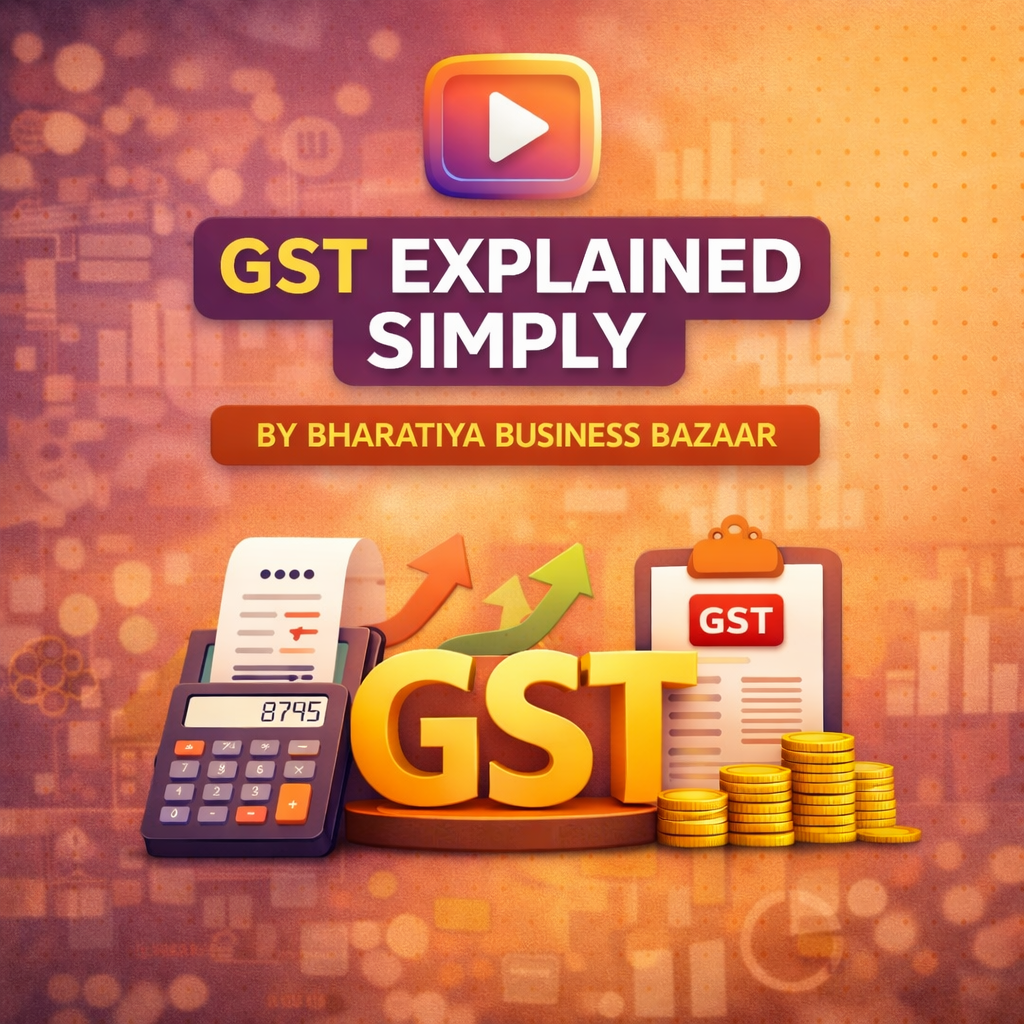
Goods and Services Tax (GST) is one of the most important reforms in India’s taxation system. Yet, for many MSMEs, startups, and small business owners, GST still feels complicated and intimidating.
This blog explains GST in simple language — what it is, how it works, compliance basics, and how businesses can save tax legally.
GST (Goods and Services Tax) is a single indirect tax applied on the supply of goods and services across India. It replaced multiple indirect taxes like VAT, service tax, excise duty, and entry tax.
👉 In simple words:
GST = One Nation, One Tax
Before GST, businesses had to deal with multiple taxes and different rules in each state. GST was introduced to:
There are four main types of GST:
Collected by the Central Government on intra-state sales.
Collected by the State Government on intra-state sales.
Collected on inter-state sales and imports.
Applied in Union Territories.
GST registration is mandatory if:
Some small businesses may opt for voluntary registration to gain credibility.
GST is divided into slabs:
Knowing the correct slab for your product/service is crucial to avoid penalties.
Input Tax Credit is one of the biggest benefits of GST.
👉 It means you can reduce the tax you pay by claiming credit for GST already paid on purchases.
💡 Proper invoices are mandatory to claim ITC.
Common GST returns include:
Filing returns on time helps you:
❌ Wrong GST slab selection
❌ Delayed return filing
❌ Missing purchase invoices
❌ Not reconciling sales & GST returns
❌ Ignoring notices from GST portal
Avoiding these mistakes can save money and stress.
Here are smart GST-saving tips:
✔ Claim all eligible Input Tax Credits
✔ File returns on time to avoid penalties
✔ Maintain accurate bookkeeping
✔ Match purchase data with suppliers
✔ Choose the correct GST scheme (Regular vs Composition)
Proper planning = lower tax burden.
Small businesses with turnover up to a specified limit can opt for the Composition Scheme, which offers:
However, ITC cannot be claimed under this scheme. Choose wisely.
Understanding GST helps businesses:
GST is not just compliance — it’s a business growth tool.
GST doesn’t have to be confusing.
With the right knowledge, tools, and discipline, businesses can stay compliant, save tax legally, and grow faster.
At Bharatiya Business Bazaar, we believe in simplifying business knowledge so entrepreneurs can focus on what truly matters — growth.